
Room to write

There was a bit of a trend in architecture in my hometown through the 1990s and through the new millennium. Maybe it was elsewhere too, I haven’t investigated. It mostly affected public buildings, mainly schools, and the general premise seemed to be it was better to please all of the people some of the time, than none of the people all of the time.
The way it worked was, a school (usually), around 100 years old, would be deemed in such need of repair that it was a miracle the building hadn’t crumbled into dust all on its own yet. Asbestos in the walls, lead in the pipes, prehistoric heating systems, blah blah. It’s gotta go, they’d say.
Then the hysterics historics would start. Can’t tear it down, built by the founders, don’t see stonework like that anymore, blah blah. Don’t you dare touch it, they’d say.
And eventually, there would be a compromise, and a plan would emerge: keep part of the original building - usually the facade - and construct something entirely new around it. Or keep the shell, gut it to the walls, and construct something new inside it. You get the gist.
A while ago, I packed whatever I could fit into a rented pickup truck, drove across the province and started again. It meant making some hard choices about what to keep and what to leave behind; harder still to make those choices in the frame of mind I was in. I was sleepwalking through most days, still not sure if I wanted to keep living at all, let alone ever use an electric frying pan again.
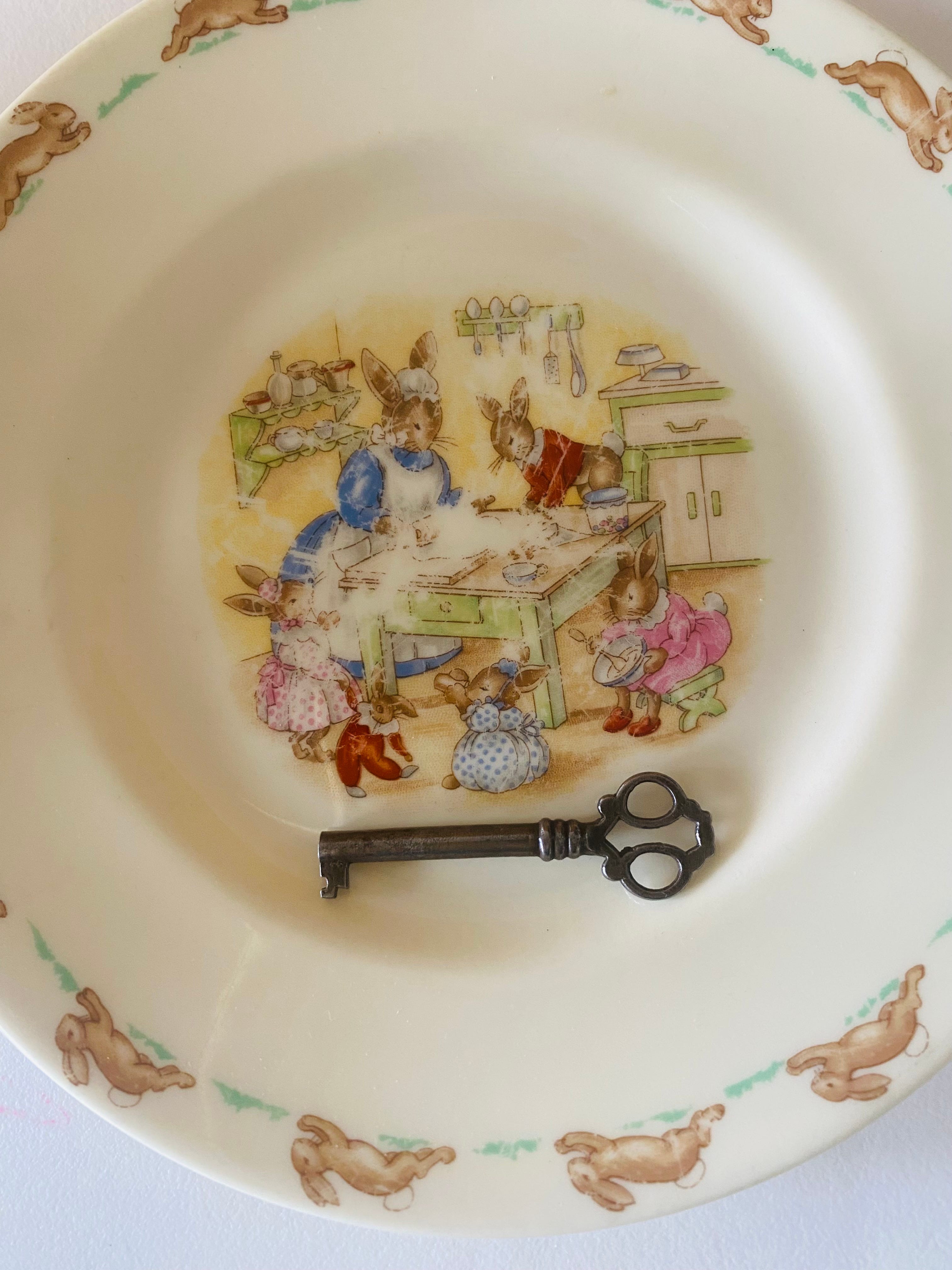
In the end, I kept a collection of things that made sense to me, though others wondered. You got rid of all your cutlery, but you hung onto the box of purple hair dye? I couldn’t explain, but didn’t really want to. Most of what I kept said me not we - select books, my grandmother’s sideboard, the chipped Bunnykins plate that had been mine as a child. An armchair. My tropical fish. Rage and confusion and heartbreak filled any leftover space*.
And then I started rebuilding. I stood in a small, empty studio apartment, the first time I had ever in my life lived somewhere that was MINE, and not ours or theirs and realized that I could do anything I wanted with my space.
Side note for historical accuracy: when I was a child and teenager, I was lucky enough to have a mother that, truly, let me do just about anything I wanted with my own bedroom. She helped me put up rainbow wallpaper, then later bit her tongue when I painted band names graffiti-style on the other walls (in leftover enamel paint!). She provided the Stic-Tac so I could paste up pages from Tiger Beat magazine, and stored the bed frame when I went through my mattress-on-the-floor phase. We argued, viciously, about whether or not I kept the room a pigsty, but decor-wise, she was cool.
My grandmother’s sideboard is the constant - the piece of furniture that’s been present in my life since the beginning. In my lifetime it’s held dishes, toys, towels and trinkets. It’s been topped with photos and flowers, and for several Christmases a miniature lighted village. Currently it holds my aquarium.
Its dark wood stain is permanently scarred in places, and the cabinet doors don’t always close properly, but it’s deceptively solid and reliable. Like me, I guess.
The rest is new-to-me, selected by cost, comfort, style or all three. The small wardrobe’s main purpose is to serve as the Door to Narnia**, but it also holds a stack of books or two. I hung twinkly lights from the curtain rods, as though I were 13 again, and instead of Tiger Beat heartthrobs I occasionally paste up a craft or colouring page from a grandchild. It’s all a bit whimsical and chaotic, like the teenager I barely gave myself the chance to be all those years ago.
Once the basics were covered - a place to sleep, a place to sit, a place to eat - my daughter said, Mama. You need a place to write.
On Facebook Marketplace, she found the desk of my teenaged dreams - one that predates desktop computers and keyboard shelves. Small, vertical, with a dropdown writing surface and pigeonholes hidden behind. It even locks, and the key is like something out of a Trixie Belden mystery. There’s room in the glass-fronted cabinet above for the few physical books I’ve kept, including the ones my writing’s been published in. Its dark wood stain is less scarred, but harbours a history of its own.
It’s deceptively solid and reliable.
The afore-mentioned design trend, I’ve learned, is actually called facadism, which is remarkably…obvious. In a 2019 The Tyee article, one architect calls it “a shallow commemoration.” Another thinks it’s important to preserve a place’s “spirit” or “mission.” I like the second idea better.
So slowly but surely, little by little, I’m claiming a place, and around it, building a life.
The challenge of facadism is choosing what to keep, what to create, and how to combine the two. Architects almost always choose the face - hence the term - but does it truly reflect the heart of a place? If the part you see first is forever the same, can you assume that what’s behind it is also familiar - that the spirit of the place remains?
There’s a saying in recovery: everywhere you go, there you are. It’s used to dispel the notion that you can ever, completely, leave who you once were behind. You can’t outrun your past. I’ve always seen it as a threat, or a caution. Don’t get any ideas.
I suddenly see it as a promise. My spirit remains, and everywhere I go, there it is.
*I’m still lugging all that around, but it’s getting less heavy as time goes by.
**Every home should have one.